On paper, Kuwait is an easy market: a small, fully urban country where almost everyone is online and spending power is high. A seller used to cash on delivery in Morocco, Egypt or Algeria will still find two surprises there. Cash is a minority choice for online purchases, and 2026 brought a new set of rules for anyone who sells on the internet. This guide covers what a COD seller needs to know before sending the first parcel to Kuwait City, Hawalli or Jahra: who the buyers are, how they pay, what the law now requires, how addresses work and how to keep refusals low.
The Kuwaiti market in numbers
According to the Public Authority for Civil Information (PACI), Kuwait had 5,098,539 residents on June 30, 2025. Kuwaiti citizens made up 30.4% of them and non-Kuwaitis a record 69.6%. Indians are the largest expatriate community with over one million residents, followed by Egyptians at 660,000. For a seller, that means one country but several audiences: Kuwaiti families, Arab expatriates and a large South Asian workforce, each with its own language, budget and shopping habits. A product page written only in Arabic, or only in English, leaves part of the market out.
Connectivity is not the obstacle. DataReportal puts internet use at 99.0% of the population at the end of 2025, counts 4.44 million social media user identities, or 87.9% of the population, and mobile connections equal to 153% of the population. The same report says 100% of the population lives in urban centres.
Two practical consequences follow. First, your ads and product pages will be read on phones, so the order form has to work on a small screen and in both main languages. Second, distances are short: you are not shipping to remote villages but into a dense urban area, so the delivery problem is less about distance and more about precision, finding the right building and the right door. The address section below deals with that.
How Kuwait pays online: KNET, cards and cash
The national payment network is KNET, the shared electronic banking services company founded in 1992 with the support of local banks. It connects the banks' payment systems: point-of-sale terminals, online payment gateways, government payments and ATMs. In its 2024 financial year, KNET reported a 17% increase in electronic transactions and a 13% increase in transaction volume through online payment gateways, while ATM cash withdrawals fell 14%.
Consumer surveys point the same way. Visa's Where Cash Hides report, based on an online survey of 1,200 people across the GCC in 2025, finds that 59% of consumers in Kuwait are largely non-cash users and that only 30% use cash for everyday purchases, down from 40% the year before. For online shopping in particular, a Checkout.com study reported by Enterprise found that only 10% of shoppers in Saudi Arabia, Kuwait and the UAE opt for cash, and that the preference for cash on delivery across the region fell from 41% in 2020 to 20%.
So COD in Kuwait is not the default it is in North Africa. It still earns its place on the checkout page, for specific buyers:
- First-time customers of an unknown store, who fear paying for a parcel that never comes, especially after seeing an ad on Instagram or TikTok.
- Customers without a card, or who do not want to type card details on a site they have never used.
- Impulse buyers who decide in seconds and want to commit to nothing until the product is in their hands.
The sensible setup is to offer both: an online payment through a gateway that accepts KNET debit cards, and payment on delivery. Ask your delivery partner whether its drivers carry a card terminal, so that "pay on delivery" can mean card or cash at the door. Every order paid at checkout is one less amount to collect and reconcile; every customer who pays at the door still gets the reassurance that made them order.
The rules: consumer law and the 2026 digital commerce decree
The base layer is Law No. 39 of 2014 on Consumer Protection, a text of 37 articles. Article 10 lets the consumer replace or return a defective product within 14 days of purchase, with vendors and suppliers jointly liable, and the law requires invoices written in Arabic.
In 2026, Kuwait added a law aimed squarely at online sellers. Decree-Law No. 10/2026 on digital commerce has 45 articles and puts the Ministry of Commerce and Industry in charge of the sector. The obligations that matter most for a COD store:
- Registration. No one may operate in digital commerce without first registering with the Ministry.
- Withdrawal. The consumer may withdraw within 14 days of receiving a product and exchange or return it for a full refund, through the original payment method or another agreed method, at no additional cost. For a COD order, decide in advance how you will refund someone who paid cash.
- Transparency. According to HFW, the store must show its name, contact information, contract terms and delivery and return policies, and issue electronic invoices in Arabic once a transaction is complete.
- Advertising. Ads must carry the provider's name, the price, an accurate description and contact details, or a link to the official social media account.
- Payments. Sellers may only work with electronic payment providers licensed by the Central Bank of Kuwait, and may not charge extra for paying electronically without its approval.
The penalties are serious: HFW lists imprisonment of up to one year, fines of KWD 1,000 to 10,000, or both, with heavier penalties for repeat offences. The start date is less settled. The Arab Times report carried by Zawya says the decree takes effect six months after publication, while HFW writes that it takes effect one month after the Executive Regulations are issued. Check the Ministry's announcements before you launch.
Two ministerial decisions complete the picture. Ministerial Decision No. 109 of 2026, in force since July 8, governs platforms and intermediary apps that sell and deliver products. They must show prices, commissions, delivery charges and any extra fees before the order is confirmed; their commissions are capped at 17% when the platform delivers and 10% when the merchant handles delivery; and the delivery fee charged to the consumer is capped at KD 1 per order. If you sell through such a platform, those caps shape your margin. Separately, Ministerial Decision No. 32 of 2026 prohibits cash transactions above 10 Kuwaiti dinars in a short list of sectors, including health institutes, salons and sports clubs. It does not cover online retail, but it shows the direction of travel.
Addresses: governorates, blocks, streets and PACI numbers
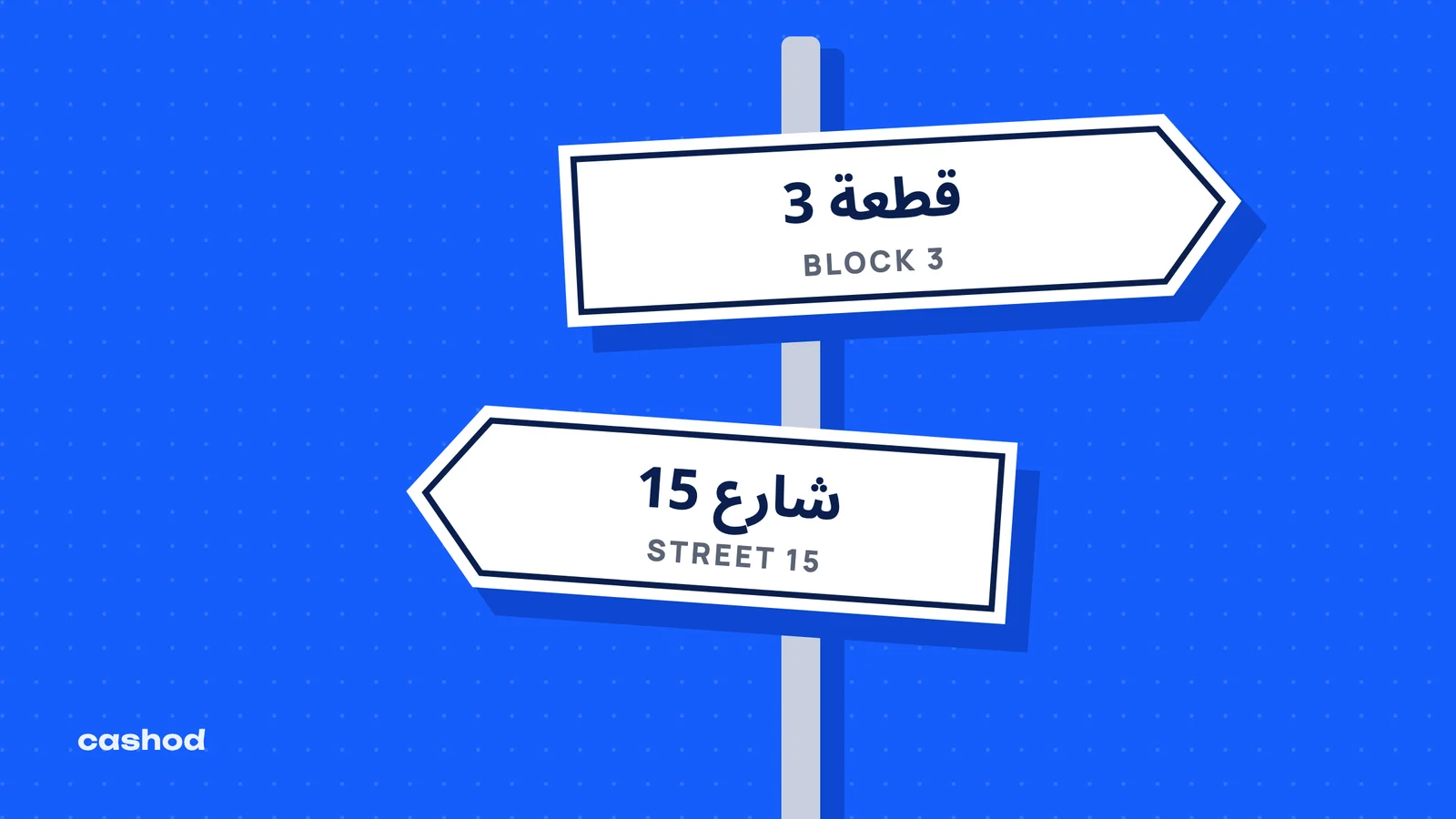
Kuwaiti addresses are structured, and the structure is your best defence against failed deliveries. PACI's official Kuwait Finder app lets anyone search an address by PACI number, or by governorate, area, block, street and parcel or house, and share any location, including their current one, through apps such as WhatsApp. Build your order form around the same fields instead of a single free-text box:
- Governorate and area, from a drop-down list, which avoids spelling variants between Arabic and English.
- Block number.
- Street, by name or number, and the avenue if there is one.
- House or building number, then floor and apartment.
- The building's PACI number, optional, for customers who know it.
- A location link, which your confirmation agent can ask for in a message.
Ask for a phone number that receives WhatsApp messages, plus a second number for homes where the buyer is not the person who opens the door. Because most residents are expatriates, note the customer's preferred language at confirmation, whether Arabic, English or another: the driver's call goes better when the customer is expecting it and understands it.
Choosing a delivery partner for COD
Kuwait has international express networks, local last-mile companies and the fleets of the big delivery platforms. For a COD store, compare them on what decides your cash flow and your refusal rate, not on the base price alone:
| Criterion | What to ask |
|---|---|
| Cash remittance | How often is the cash collected for you transferred, and with what statement per parcel? |
| Payment at the door | Do drivers accept KNET cards on a portable terminal, or cash only? |
| Failed attempts | How many attempts are included, and does the driver call before coming? |
| Returns | What does a returned parcel cost, and how fast does it reach your stock again? |
| Addresses | Do drivers work from PACI numbers and location links? |
| Tracking | Can you and the customer follow the parcel online? |
| Licensing | Is the company licensed for the activity it performs under the new rules? |
Run a test batch with two partners before committing your volume, and measure delivered parcels rather than shipped ones. The COD calculator shows whether the delivery fee, the return cost and your refusal rate still leave a margin on the product.
Confirm every order before it ships
Every COD order shipped without confirmation is a bet. In Kuwait as anywhere else, a short call or message before dispatch catches fake orders, incomplete addresses and changed minds while they still cost nothing. A good confirmation:
- happens soon after the order, while the customer still remembers it;
- speaks the customer's language, at least Arabic or English given the population mix;
- repeats the product, the price in dinars and the delivery fee, so nothing surprises the customer at the door;
- completes the address with block, street, house and a location link;
- tells the customer whether they can pay by card when the parcel arrives.
For method and examples, read our guides to confirming COD orders and preventing fake orders. They were written for Morocco, but the principles carry over even where the market details differ.
Handling Kuwaiti COD orders in Cashod
Cashod is built for cash on delivery operations. What it brings to a Kuwaiti store:
- Cashod includes a call center where agents confirm COD orders by phone.
- Cashod can confirm orders over WhatsApp, including with an AI agent.
- One Cashod account can manage several stores, so a Kuwaiti store can sit next to the ones you run in other countries.
- Cashod tracks returned parcels; each carrier's delivery and return fees are set per city.
On carriers, be clear: none of the carriers Cashod lists today is Kuwaiti. Any other carrier can be added to Cashod manually, without automatic shipment creation or tracking.
Cashod support answers by email, chat and phone, Monday to Friday, 9 AM to 6 PM GMT (Morocco time); Kuwait is three hours ahead of GMT. Plans are on the pricing page.
Launch checklist for a COD store in Kuwait
- Register the digital business with the Ministry of Commerce and Industry, and follow the Ministry's announcements on when the new decree applies.
- Publish your name, contact details, delivery policy and return policy on the store, in Arabic and in English.
- Show prices in Kuwaiti dinars, with the delivery fee, before the customer confirms the order.
- Offer online payment through a provider licensed by the Central Bank, alongside payment on delivery.
- Use a structured address form with block, street, house and a location link.
- Confirm every COD order before dispatch, in the customer's language.
- Decide how you refund a customer who paid cash and returns the product within the 14-day window.
- Test two delivery partners and compare delivered rates, return costs and remittance delays.
- Issue invoices in Arabic for every completed sale.
Kuwait rewards sellers who treat COD as one payment option among several, not as the whole model. Get the paperwork and the addresses right, confirm before you ship, and payment at the door becomes a way to win the customers who are not yet ready to pay a store they have never tried.