Ramadan 2027 is expected to start around Monday 8 February. For a cash-on-delivery seller it is both the most promising and the most treacherous month of the year: demand rises, your customers’ day moves to different hours, they pick up the phone at different times, and an Eid outfit delivered the day after Eid is almost certain to come back. This guide starts from the calendar and works backwards: what to stock and when, where to put the ad budget, how to adapt confirmation and delivery, and how to close the month without a wall of returns.
The Ramadan 2027 calendar and the countdown
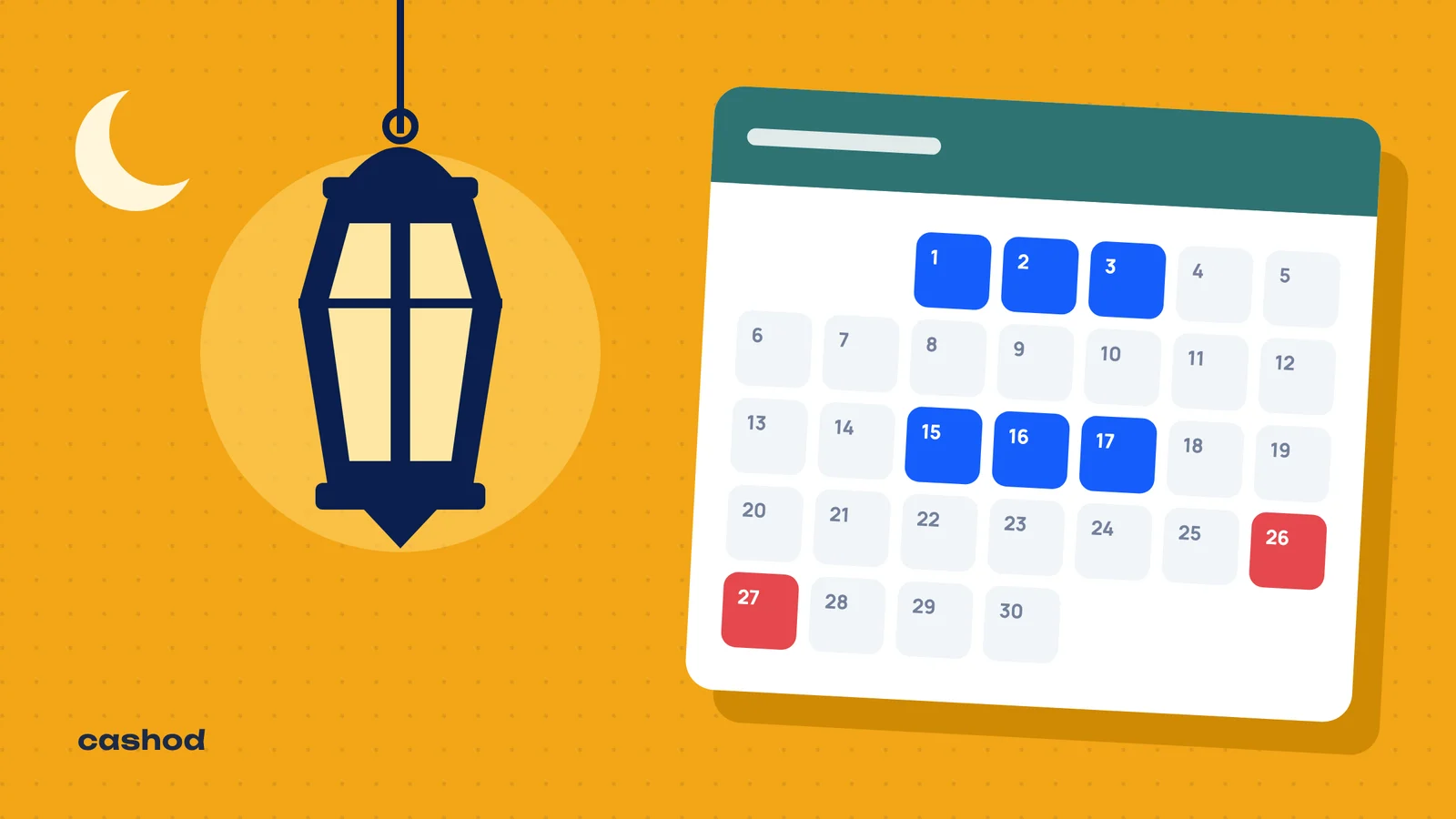
According to astronomical calculations reported by La Presse, Ramadan 1448 should begin on Monday 8 February 2027. The National carries the same projection: the holy month is predicted to begin on February 8, 2027, and to last either 29 or 30 days. That puts Eid al-Fitr around 9 or 10 March 2027. These are forecasts, and the date remains provisional until the crescent is sighted and the official announcement is made. A one-day shift is always possible, at the start and at the end.
Two practical consequences follow. First, every deadline you set (last supplier order, last customer order deliverable before Eid) should be worked out on the shorter scenario, an Eid on 9 March. Second, Ramadan moves about 10 to 11 days earlier each year. Last year’s numbers still help, but they were made in a different season, next to different seasonal products. A shop that sold fans during a hot-weather Ramadan will not sell them in February.
Here is a simple backward plan to adjust to your suppliers’ lead times:
| When | Stock | Advertising | Team and delivery |
|---|---|---|---|
| Eight weeks before | Pick the products for both waves, place supplier orders | List the angles: Ramadan, gifts, Eid | Ask each carrier for its hours and closing days |
| Four weeks before | Receive, inspect, photograph | Test creatives and audiences on a small budget | Build the confirmation agents’ rota |
| First fortnight | Restock home and kitchen products | Scale the budget on what won in testing | Switch to the new calling hours |
| Last week before Eid | Clothes, children, gifts | “Delivered before Eid” message with a cut-off date | Close orders deliverable before Eid, city by city |
| After Eid | Stock count, leftovers | Cut or redirect campaigns | Follow returns and reconcile payouts |
What really changes in demand
Ramadan is a well-documented consumption driver. In an analysis by Challenge magazine summarised by Le360, household consumption rises by 18.2% on average during the month, online platforms see orders rise by up to 40% and electronic transactions grow by 30 to 50%, notably for donations and zakat. In large retail, Ramadan can account for between 25 and 35% of annual turnover.
Treat those as orders of magnitude, not a promise. A narrower measurement by Flowwow and Admitad, based on more than 700,000 transactions across the region, shows Morocco recording a 13% increase in gross merchandise value during the holy month, with an average order value of $72, up 2.9%. The authors describe Moroccan shoppers maintaining consistent spending rather than sharp spikes. So build your base forecast on moderate growth and keep the “up to 40%” for the high scenario.
Timing matters as much as volume. Challenge again, on large retail: demand peaks during the first two weeks before gradually returning to normal after Eid. And the phone is the shop window: 75% of online purchases in Morocco are made on a smartphone. Finally, payment habits do not change with the month: cash on delivery is still used by more than eight buyers in ten, while 24.9% of Moroccans bought online in 2024, against 15.1% five years earlier. More orders therefore mean more confirmation calls, more parcels on the road and, unless something changes, more returns.
Stock: two waves, not one
The month is played in two halves, with different products. The first wave, early in the month, is about the home: kitchenware, serving dishes, decoration, household linen, small appliances, personal care. The second arrives in the last days: Eid clothes, children’s above all, traditional outfits and gifts. A trader in Taroudant summed it up for the MAP news agency: the last days of Ramadan usually bring a demand peak, with shops busy late into the night.
That second wave runs more and more through the phone. Le Matin already reported that Moroccans now prefer to buy on social networks for their Eid outfits, quoting a mother who prefers to shop online and have it delivered at home. For one Casablanca seller, most sales in the final days were children’s clothes, and for traders like him the period used to bring more than 20% of their turnover.
Large companies prepare months in advance: they adjust stock, plan marketing budgets and hire temporary staff. At your scale, a few rules are enough:
- Forecast in delivered orders, not orders received. If seven confirmed orders in ten are delivered, that ratio sizes the stock you actually sell; the rest comes back and ties up goods during the peak.
- Count stock in transit and in returns. During Ramadan a refused parcel takes time to come back. It is not stock you can sell in the second wave.
- Sizes and colours: plan for exchanges. With children’s clothes, a wrong size turns into a refusal unless an exchange is offered on the phone.
- Do not order Eid together with Ramadan. Second-wave products can arrive later, but they must be on the shelf before the last week, photographed and tested in ads.
Advertising: evenings, phones and competition
Attention moves to different hours. A study by Integrate and Com & Talk Agency published by Telquel finds that digital takes over right after iftar, with an engagement peak between 22 h and 3 h when engagement explodes on Facebook, Instagram and TikTok. On those evenings, 44% of Moroccans juggle between the TV and their smartphone. You will not be alone: the month’s ad market exceeds 2 billion dirhams, concentrated on TV and digital.
Do not turn that into an oversimplified rule. The Flowwow and Admitad data place 38% of purchases between noon and 6 p.m. The two measurements are not about the same thing, one tracks engagement on social networks and the other tracks online purchases, but together they are a reminder that a customer can discover a product at night and order it the next day. Before switching off daytime ads, test the hourly split on your own orders.
- Test before, scale during. Winning creatives and audiences are found in the weeks before, on small budgets. During the month you scale what works instead of learning in the crowd.
- Speak to the moment. An iftar table, a gift message, then a clear deadline: “order before this date to receive it before Eid”.
- Judge on delivered parcels. A cost per order that drops in the evening is worthless if those orders do not answer at confirmation. The profit rules for COD ads matter even more when the budget swells.
Confirmation: move the calling hours
The whole country shifts its day. For Ramadan 2026 the government set continuous working hours from 9h to 15h in public administrations. Your customers live the same shift: tired in the late afternoon, preparing iftar, praying, then an active evening. Calling at the moment the fast is broken guarantees a missed call and sometimes an irritated customer.
In practice, split calls into two windows: late morning to early afternoon, then the evening after iftar, when the phone is back in hand. Your agents are fasting too: shorter sessions, a break before iftar and a rota for the evening slot stop an exhausted agent from rushing the second-wave calls. WhatsApp, which Telquel lists among the channels that play a key role in direct interactions with consumers, lets you leave a message the customer reads after prayers.
Adapt the script too: a seasonal greeting at the start, a reminder of the expected delivery date and, for Eid orders, the question that prevents a refusal: “if the parcel arrives after Eid, do you still want it?”. Our guide to COD order confirmation in Morocco covers the method in detail.
Delivery: hours, cut-offs and the Eid problem
Couriers live the same rhythm as customers. A delivery attempt late in the afternoon, just before iftar, often meets a customer who cannot be reached. Before the month starts, ask each carrier for its pickup hours during Ramadan, its closing days around Eid and its real lead time per city during the peak: those three answers set your cut-off dates.
The most profitable rule of the month is the “delivered before Eid” cut-off, worked out city by city. A child’s outfit that arrives after the celebration has no reason to be accepted. Because demand peaks in the final days, that is exactly when the temptation to take every order is strongest. Pick one of three options in advance:
- Show the cut-off in your ads, on the product page and in the confirmation message, with an earlier date for distant cities.
- After the cut-off, keep selling but say so clearly: “delivery after Eid”, confirmed on the phone.
- Pause Eid-specific products and keep only products with no deadline.
On packaging, the second wave is often a gift: a clean box with no visible price reduces refusals at the door in front of the family.
After Eid: returns, payouts and lessons
Demand gradually returns to normal after Eid. That is the time to close the books before the details fade. Parcels shipped late come back in the days after the celebration; follow each one until it is physically back in stock, and reconcile every carrier payout with delivered orders. Then measure the month’s return rate by city, product and campaign, keeping refusals, unreachable customers and parcels that arrived after Eid apart: the method is in our article on the COD return rate.
Finally, write down what you will do differently next year: which product ran out, which city was delivered too slowly, which calling window confirmed best. Since Ramadan moves forward by roughly ten days a year, those notes are worth more than the raw figures.
What Cashod brings during Ramadan
Cashod includes a call center where your agents confirm COD orders by phone: that is where you apply the new calling windows and follow each agent’s work through the peak. Cashod can also confirm orders over WhatsApp, including with an AI agent, which is useful for orders placed late in the evening after your team has finished its day.
After Eid, Cashod tracks returned parcels, and each carrier’s delivery and return fees are set per city, so you can see what the second wave really cost you, city by city. And if you open a store dedicated to Eid, one Cashod account can manage several stores.