
In a cash-on-delivery store, packaging is the one moment when the product meets the customer before any money changes hands. The customer pays only after seeing the parcel. If it arrives crushed, wet or torn, they have every reason to refuse it, and the seller pays twice: once for the damaged product and again for the trip back. Yet an oversized box or too much padding costs a little on every shipment, and that adds up against the margin. This guide works through that trade-off: enough protection, without paying to ship air. It covers choosing the container for each product, padding, sealing, labelling, what Moroccan law says when a parcel arrives broken, and what law 77-15 means for plastic mailers.
What a badly packed parcel really costs
Cash on delivery is demanding even without breakage. An expert quoted by Le Matin puts the merchant’s refusal rate at delivery between 20 and 40%. Every avoidable refusal matters, and a damaged parcel at the door is one of them: the customer sees a dented box, imagines a broken product and declines without opening it.
La Poste sums it up in one line of its guide for businesses: packaging quality directly determines the damage rate at delivery. For a COD seller, a damaged parcel actually costs four things:
- the product, if it is broken or can no longer be sold as new;
- the outbound trip and, depending on the carrier, the return, paid for a sale that never happened;
- the advertising and the confirmation work that produced the order;
- the customer’s trust, since they may never order again, or may tell others.
To put a number on what each returned parcel costs you, use the method in our article on profit per delivered order: packaging is a cost line of its own there, and breakage feeds the returns line.
Who pays for breakage: what the Commercial Code says
In Morocco, the contract of carriage falls under Title VI of law 15-95, the Commercial Code. Three articles bear directly on packaging.
- Article 458 sets the principle: the carrier answers for loss and damage to the goods from the moment they are handed over until delivery, and any clause relieving it of that liability has no effect.
- Article 459 sets the exceptions: the carrier is discharged if it proves the damage came from an inherent defect of the goods or their nature, or from the act or instructions of the shipper. A fragile product with poor protection is exactly where that argument starts.
- Article 449 works in your favour: if the carrier accepts the parcels without reserve, they are presumed to have no external packaging defect.
Article 475 adds a deadline worth remembering: for damage that was not visible on receipt, expert verification must be requested as soon as the damage is found and within seven days of receipt.
In practice: photograph sealed parcels before pickup, keep a record of the handover to the courier, and note any reserve the courier makes. Some carriers also offer cover; Livo, for example, advertises optional full insurance on parcels against damage or loss. Read your carrier’s terms: what is covered, up to what amount, and what is excluded when packaging is judged inadequate. This article is not legal advice; for a significant dispute, speak to a lawyer.
Choosing the container for each product
There is no universal right packaging, only packaging that suits what you sell. The table below covers the product families most common in COD:
| Product | Container | Watch out for |
|---|---|---|
| Clothing, textiles, scarves | Thick, opaque mailer bag | Fold neatly; a creased garment disappoints on opening |
| Cosmetics, perfume, oils | Small padded box, bottle inside a sealed bag | Cap tight and taped; a leak also ruins the courier’s other parcels |
| Glass, ceramics, electronics | Double-wall corrugated box, each item wrapped | No play between the item and the walls |
| Shoes, handbags | Original box placed inside a carton or mailer | Never stick the label on the branded box itself |
| Small accessories, jewellery | Small rigid box or padded envelope | A tiny item in a big box gets lost or broken |
For fragile goods, La Poste recommends double-wall corrugated board, wrapping each item individually in bubble wrap or kraft paper, and marking “Fragile” on every face of the parcel. Keep Colissimo’s advice in mind too: if you are unsure whether the original packaging is strong enough, over-pack the parcel. A few dirhams of cardboard cost less than a return.
Padding, sealing and labelling
Padding. The product must not move when you shake the sealed parcel. Fill the gaps with crumpled paper, recycled cardboard or air pillows. Colissimo advises you to avoid polystyrene, which tends to disintegrate quickly and pollutes. Test your packaging: La Poste’s standard is resistance to drops of up to 50 cm. Drop a test parcel from that height onto each face; if the product suffers, the padding is not enough.
Sealing. Close boxes with a cross (H) seal and wide, strong tape: it is the method La Poste favours and that Colissimo calls particularly robust. A solid seal also discourages anyone from quietly opening the parcel along the way.
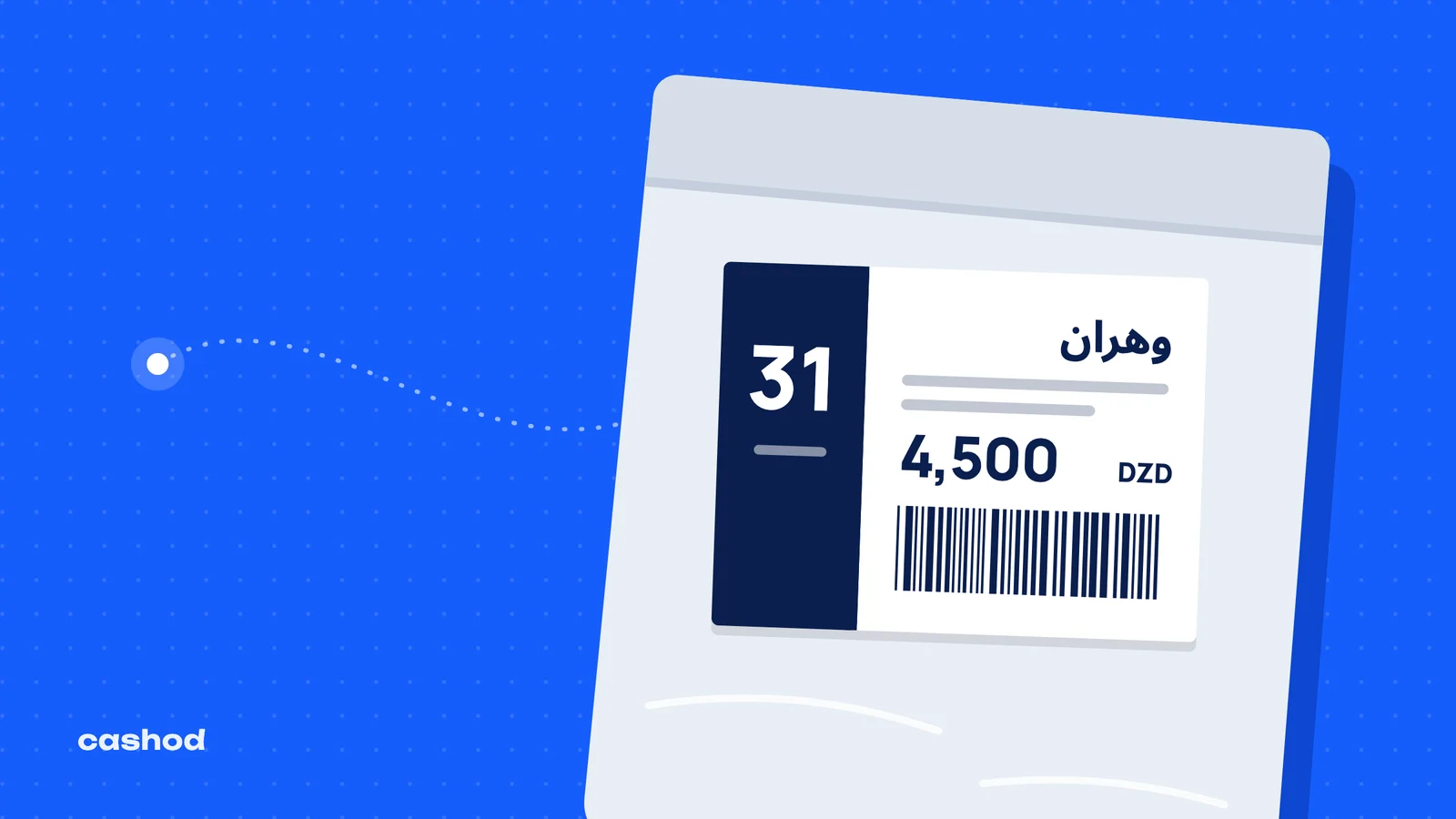
The label. Colissimo asks for a label of at least 15 cm by 10 cm, flat on the largest face, and says to avoid placing the label on an edge. It must not be under a plastic sleeve or covered with clear tape that blocks the scan. Even if your Moroccan carrier does not scan everything, these rules help the courier: a name, a phone number and a city readable at a glance prevent sorting mistakes and pointless calls.
What must not ship. As Colissimo reminds sellers, the e-retailer is responsible for what it ships. Aerosols, flammable products and other dangerous goods follow strict rules: ask your carrier for its list before you sell them.
Packaging and refusals at the door
With COD, the parcel is judged before it is paid for. A few packaging choices weigh directly on the customer’s decision:
- A plain, clean outside. No product name on view, no luxury brand logo on the box: it protects the customer’s privacy and discourages theft. A reused box covered in old labels makes the product look second-hand.
- An inside that confirms the order. A delivery note with the product name, the size or colour chosen, the amount due and a customer-service number reassures the customer at the moment they hesitate.
- Packaging that reopens cleanly. If your carrier lets customers check the contents before paying (ask, because practice varies), choose packaging that is easy to open and close again. If the customer refuses, the product travels back in good shape, because a product badly protected on its way back cannot be returned to stock.
Packaging does not replace confirmation: a customer who never really wanted the product will refuse a perfect parcel too. The two levers work together, as our article on measuring and reducing the return rate shows, where parcels returned damaged form a category of their own.
Cutting packaging cost without weakening the parcel
Empty space costs twice. La Poste explains that an oversized box creates useless empty space that raises the volumetric weight and therefore the shipping cost, while weakening the parcel. For air shipments, Colissimo computes that volumetric weight as length × width × height in cm ÷ 5,000 and charges whichever weight is higher. Moroccan delivery companies often charge per parcel, by city; still, ask yours whether a weight or size bracket applies before an invoice tells you.
A few habits that lower the cost without adding risk:
- Standardise on three or four sizes of boxes and mailers that cover your whole catalogue, and buy them in bulk.
- Pack only confirmed orders. Preparing a parcel that will be cancelled throws away cardboard and time.
- Reuse packaging from intact returns for padding or internal transfers, never as the outer box a new customer sees.
- Outsource when volume justifies it. Some carriers offer it: Forcelog says it can prepare your orders and pack your parcels before shipping them. Compare that price with your real in-house cost, time included, using our COD calculator.
Plastic mailers: what law 77-15 changes
Law 77-15, in force since 1 July 2016, bans making, importing, exporting, selling and using plastic bags. It was amended and supplemented by law 57-18. The stakes were high: before the ban, Morocco used 26 billion plastic bags a year.
The summary of the law on the UNEP legal platform targets bags supplied to consumers at points of sale, whether paid for or free, to carry their goods. Industrial-use bags follow a separate regime: a decree sets their technical characteristics and restricts their supply to those who use them for that purpose. The text does not explicitly settle the case of the e-commerce mailer. Two cautious rules follow: never wrap a parcel in a shop carrier bag (the “mika”), and buy your mailers from a registered supplier who can tell you which category they belong to. Cardboard and paper remain the safest choice. Do not take what you see in the souks as a guide: eight years after the law came into force, plastic bags remain widely used, which does not make them legal.
Tracking breakage and returns with Cashod
Cashod tracks returned parcels, and each carrier’s delivery and return fees are set per city, so you can see what every returned parcel cost you. See returns management. To pack only orders that will hold, Cashod includes a call center where agents confirm COD orders by phone, and it can confirm orders over WhatsApp, including with an AI agent. One Cashod account can manage several stores.
The checklist before every pickup
- The order is confirmed and the product matches (size, colour, quantity).
- The container suits the product, with no empty space; nothing moves when you shake it.
- Liquids are capped, taped and bagged; fragile items are wrapped one by one.
- The box is cross-sealed; no product name is visible from outside.
- The label is legible, flat, on the largest face and not covered.
- The delivery note is inside; a photo of the sealed parcel is taken.
To go further on choosing a carrier, read our comparison of COD delivery prices by city.