The United Arab Emirates is on the list of many COD sellers from Morocco, Egypt and Tunisia. Incomes are high, almost everyone shops from a phone, and Dubai sets the pace for online retail across the Gulf. Sellers who arrive with a Moroccan cash-on-delivery playbook find a market that has long liked COD and is now moving away from it, licences that differ from one emirate to the next, and addresses that look nothing like a street address in Casablanca.
This guide covers what changes when you sell COD in the UAE: the size of the market, where cash really stands, licensing, consumer and tax rules, delivery, order confirmation under the telemarketing rules, and the profit calculation. It draws on the UAE government portal (u.ae), law-firm summaries and market data. It is general information, not legal or tax advice: have a professional in the UAE check your own case before you start selling.
A small, wealthy and fully connected market
The population is small, but every part of it is online. A Digital UAE factsheet from the Telecommunications and Digital Government Regulatory Authority (TDRA), reported by Khaleej Times, found that active internet users make up 99 per cent of the population, the highest share in the world. The same report counted up to 10 million active social media accounts, 105.5 per cent of the population. A COD store that lives on Instagram, Snapchat and TikTok ads will find its audience already there.
ECDB estimates that UAE e-commerce generated more than US$8 billion of revenue in 2025, with growth of 10-15% on the previous year. Online still accounts for only 10-15% of retail revenue, so there is room to grow. Electronics is the largest category with 34% of revenue, and the biggest online retailers are Amazon, then Noon and Carrefour. Expect a demanding buyer, used to large marketplaces, fast delivery and clear return policies.
Payments are changing as well. Mordor Intelligence estimates that digital wallets held 43.92% of e-commerce payments in 2025, and names Aani, the national instant-payment platform launched in 2023, among the forces cutting reliance on cash.
Cash on delivery: from habit to trust tool
COD has deep roots in the UAE. In a 2021 Gulf News column, Sandeep Ganediwalla of Redseer recalled that cash-on-delivery orders used to contribute 65 per cent plus of online order volumes, even though card use was high. He also noted that Amazon, before it bought Souq, was one of the key players in the region that did not offer cash on delivery. His reading: COD was more about earning trust for new online stores than about reaching unbanked shoppers. In Redseer’s survey, only half of consumers said cash was their preferred form of payment.
The shift has continued. Mordor Intelligence writes that COD once accounted for 50-60% of UAE e-commerce orders, and cites Checkout.com data showing that COD volumes fell 37% over four years, with 74% of users saying they would default to card or wallet if COD vanished. The same report says prepayment reduces refusal rates by 12-15 percentage points.
In practice, for a COD seller:
- Use COD to win the first order. A buyer who meets an unknown brand in a sponsored video is wary of paying up front. COD removes that doubt.
- Make prepayment the default for repeat buyers. A small discount or free delivery for paying online usually costs less than one refused parcel.
- Take instalments seriously. As early as 2021, awareness of buy now, pay later had crossed the 50 per cent threshold in the UAE, with providers such as tabby.
- Limit COD to the cases where it pays. First orders, baskets under a set amount, well-served areas. Risky orders (an unreachable number, a vague address, past refusals) go to prepayment.
Licence first: the e-commerce law and your emirate
Online trade is governed by Federal Decree-Law No. 14 of 2023 on commerce through modern means of technology, in force since September 2023. It covers sales on websites, platforms, smartphone apps, social media and virtual stores, so a store that sells only through Instagram or WhatsApp is covered. Middle East Briefing notes that it applies to all e-commerce platforms serving users in the UAE, including those operating from abroad. Merchants must provide detailed digital invoices and sell only authorized goods and services.
To trade on the mainland, outside the free zones, you apply through the Department of Economic Development (DED) of your emirate, and every eTrade licence also needs approval from the TDRA. Each emirate has its own formula:
- Abu Dhabi: the e-commerce licence covers 1,057 activities, all exempt from the need for a physical office, and has been opened to GCC nationals and UAE residents under set legal forms.
- Dubai: the eTrader licence lets UAE nationals and GCC nationals residing in Dubai sell through social networks. Holders cannot open a physical store or issue visas.
- Sharjah: the Eitimad licence is open only to UAE nationals residing in Sharjah.
- Free zones: Dubai CommerCity is a free zone built for e-commerce, with 100 percent foreign ownership available.
For a Moroccan seller without UAE residence, the home-based licences are usually out of reach. The realistic routes are a free-zone or mainland company, or a partnership with a licensed local business. Have a company-formation adviser confirm the right route before you spend your first dirham on ads.
Consumer rules and VAT: Arabic, invoices, returns
The Consumer Protection Law, Federal Law No. 15 of 2020 as amended by Decree-Law No. 5 of 2023, covers goods sold through e-commerce platforms registered in the UAE. The points that matter for a COD store:
- An Arabic invoice. Dated, with trade name, address, goods, price and quantity, and it must be in Arabic, with any other language optional.
- Information in Arabic. An online store must give details of its licensing entity and information in Arabic on the product, the contract terms, payment and warranty. Your product page and order form need an Arabic version, even if most of your traffic arrives in English.
- Data. Suppliers must refrain from using consumer data for promotional and marketing purposes. The phone numbers you collect to confirm orders are not a marketing list.
- Returns. The e-commerce law gives buyers the right to return goods bought online. Publish a clear return policy before your first sale.
- Penalties. Misleading prices, false information, or refusing to repair or replace a defective product can lead to up to two years in prison and a fine of up to AED 2 million.
The law states that it does not apply between UAE customers and e-commerce businesses registered outside the UAE. That is not a loophole. The e-commerce law still applies, buyers trust local stores more, and COD at any scale needs local stock and a licensed entity anyway.
On tax, VAT is 5 per cent, in place since 1 January 2018. A UAE-based business must register once its taxable supplies and imports exceed AED 375,000 a year, and may register voluntarily above AED 187,500. A business based outside the UAE that makes taxable supplies there must register regardless of value, unless someone else is liable for the tax. Show prices including VAT and build it into the amount the courier collects.
Delivery: Makani, the northern emirates and choosing a carrier
Delivery is fast in the big cities, but the details matter. ECDB finds that DHL is the shipping provider offered by most online retailers, and Shopify the leading shop software. Aramex, Emirates Post and a long list of local last-mile companies complete the field sellers compare.
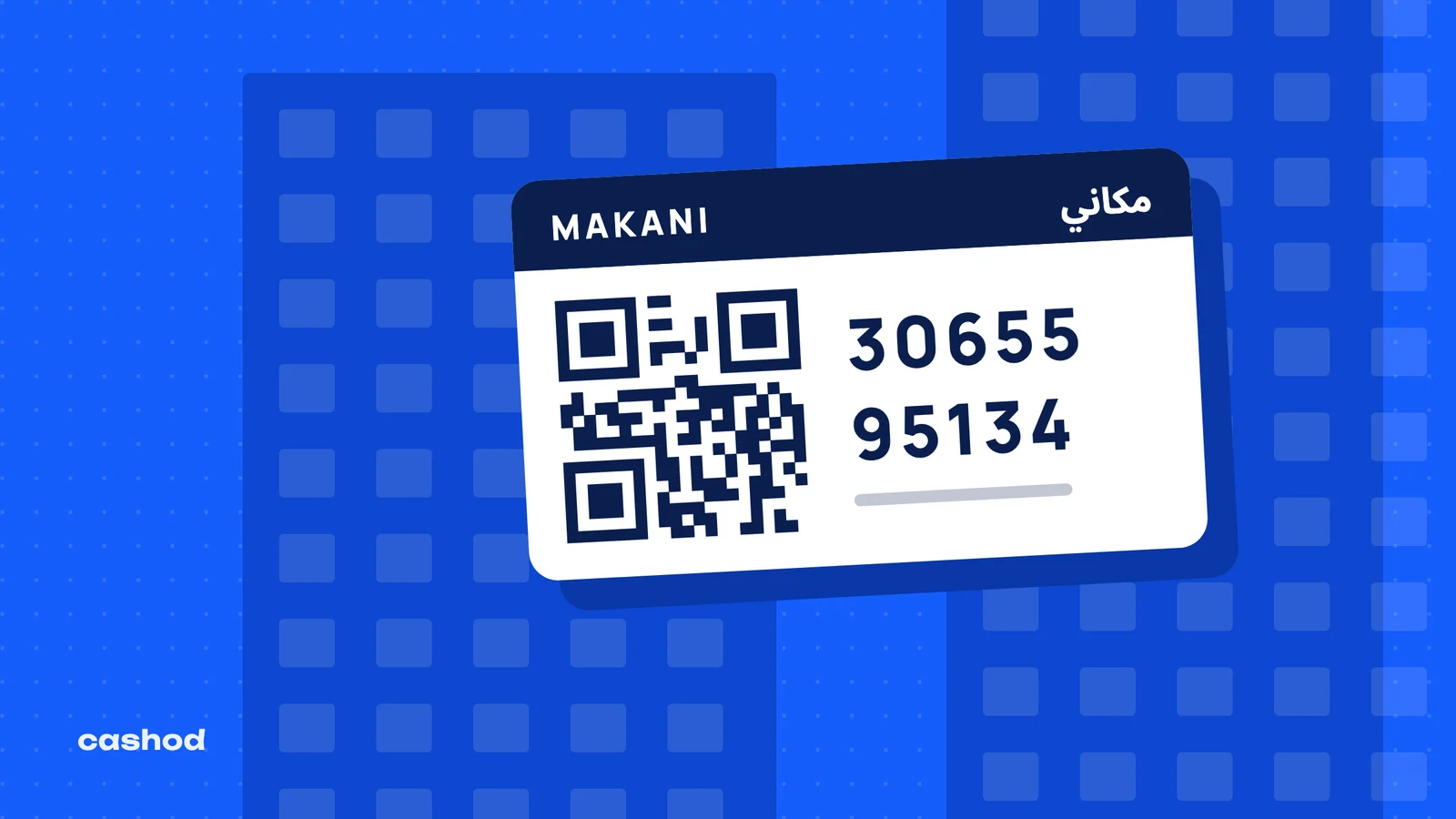
The first hurdle is the address. Many buyers describe where they live by building name and landmark. Dubai and the northern emirates have an answer: Makani, a 10-digit number that gives the exact location of a building’s entrance. It is the official addressing system in Dubai, Ajman, Fujairah, Ras Al Khaimah and Umm Al Quwain. Add an optional “Makani number” field to your order form, next to the building name, flat number and a landmark.
The second hurdle is cost by area. Mordor Intelligence reports that delivery in Fujairah, Ras Al Khaimah and Umm Al Quwain costs AED 35-50 per parcel, double Dubai’s AED 15-25. A refused parcel there costs twice as much, so price delivery by zone or set a minimum basket for those areas.
Before you sign with a carrier, ask each one the same questions:
- What do they charge to collect cash, and how often do they pay it out?
- How many delivery attempts before a return, and what does a return cost?
- Does the courier call the buyer before arriving? Do they accept a Makani number?
- How will you match payouts against delivered orders?
Finally, shipping every parcel from Morocco adds days and customs paperwork, and a refused international parcel is very expensive. Serious COD selling runs on stock inside the country, with a fulfilment provider or in a free zone.
Confirming orders within the calling rules
A refused parcel pays for transport twice and earns nothing, so confirmation is still the best protection. The script checks the name, emirate, area, building, Makani number and product, and above all the exact amount to hand the courier, VAT and delivery included. Make sure your agents can confirm in both Arabic and English.
Outbound calls are regulated. Cabinet Resolutions No. 56 and No. 57 of 2024, effective from 27 August 2024, govern telemarketing. According to Clyde & Co’s summary, companies need prior approval from the TDRA, must call from local numbers registered under the company’s commercial licence, and marketing calls are restricted to between 9 am and 6 pm. A consumer who turns down an offer must not be called again, and consumers can sign up to a Do Not Call Registry.
A call that confirms an order the customer placed is not a sales call. Once an agent pitches an extra product, though, the call moves into marketing territory. The simplest policy: call inside that window, from local numbers, and keep upsells under control.
Mind the clock. The UAE is four hours ahead of GMT, and so four hours ahead of Morocco. A team in Casablanca working afternoons is calling Emirati buyers in the evening, outside the permitted window, so plan a morning shift. For the method, see our guides to COD order confirmation and to fake COD orders.
Count profit per delivered order, in dirhams
In the UAE as anywhere else, profit is measured on delivered and collected orders. Add up the product cost, advertising per order, delivery by zone, cash-collection fees, VAT and the cost of refusals: each refusal adds a trip out and a trip back. Our COD calculator lets you test these inputs before you set a price in dirhams, and our article on profit per delivered order walks through the method.
Prepayment improves the result directly. If paying up front really cuts refusals by 12-15 percentage points, a modest discount for online payment usually pays for itself, especially for deliveries to the northern emirates.
Where Cashod fits
Cashod is a COD order-management tool. For a store selling in the UAE, this is what it covers:
- Phone confirmation. Cashod includes a call center where agents confirm COD orders by phone.
- WhatsApp confirmation. Cashod can confirm orders over WhatsApp, including with an AI agent.
- Several stores. One Cashod account can manage several stores, for example a UAE store next to a Moroccan one.
- Returns. Cashod tracks returned parcels; each carrier’s delivery and return fees are set per city.
On delivery, to be plain about it: any other carrier can be added to Cashod manually, without automatic shipment creation or tracking. Your team then follows parcels on the carrier’s side.
Cashod support answers by email, chat and phone, Monday to Friday, 9 AM to 6 PM GMT (Morocco time), which is four hours behind the clock in Dubai.
Checklist before your first UAE order
- A legal structure and licence that fit: free zone, mainland or a local partner.
- A mobile store in Arabic and English, prices in dirhams including VAT, the licensing entity on display.
- An Arabic invoice and a published return policy.
- VAT registration checked against your turnover and where you are established.
- A “Makani number” field on the order form.
- Stock in the country and a delivery price list by emirate.
- A carrier chosen after comparing COD fees, payout timing and return prices.
- Confirmation calls inside the permitted window, from local numbers, with a morning shift in Morocco.
- Online payments next to COD, with a reason to choose them.
The UAE rewards stores that feel local and deliver fast. COD still helps win new buyers there, as long as every order is confirmed and COD sits next to the digital payments shoppers already use.