Saudi Arabia draws a growing number of online sellers from Morocco, Egypt and Tunisia. Buyers have money to spend, almost everyone is online, and most people shop from their phone. Many of these sellers arrive with a cash-on-delivery (COD) habit, because COD is the default way to pay at home. That habit needs rethinking. Cash is falling fast in the Kingdom, the law sets clear duties for online stores, and delivery works differently, starting with the National Address.
This guide covers the market, where COD still fits, what the law asks of an online store, delivery, order confirmation and the profit calculation. It draws on official sources (the central bank, the telecoms regulator, the statistics authority) and on published legal summaries. It is general information, not legal or tax advice: have a professional check your own situation before you start trading in the Kingdom.
A large market that pays less and less in cash
According to ECDB, Saudi e-commerce generated US$11,366m of revenue in 2025. Demand is broad: in the 2025 survey of the General Authority for Statistics (GASTAT), 71.0% of individuals make online purchases, including 80.2% of Saudi nationals. The top categories are the ones most COD stores sell. Clothing, footwear and sports goods are bought online by 88.8% of online shoppers, and cosmetics by 40.2%.
The Saudi Internet Report 2024 from the Communications, Space and Technology Commission (CST) adds three useful signals. Internet penetration has reached 99%. Mobile phones account for 99.4% of usage, so the store has to be built for the phone first. And 93.1% of online shopping happens on local websites. Saudi buyers buy local: an Arabic storefront, prices in riyals, a Saudi phone number and domestic delivery earn more trust than a store that looks foreign.
Payments are where the contrast with Morocco is sharpest. The Saudi Central Bank (SAMA) reports that electronic payments made up 85% of total retail payments in 2025, up from 79% in 2024, with 14.6 billion electronic transactions, compared to 12.6 billion in 2024. In e-commerce specifically, Worldpay data published by Antom puts digital wallets at 40% of transactions, while cash is only 8% in 2025, projected to fall to 5% by 2030.
Where cash on delivery still earns its place
COD does not carry the weight in Saudi Arabia that it carries in Morocco. It still does a job in specific situations, and those are the situations to use it for:
- A first order from an unknown brand. Someone who finds your store through a social-media ad is wary of paying up front. COD removes that doubt.
- Impulse purchases. A product seen in a short video and ordered in seconds: asking for a card at that moment can lose the sale.
- Products people want to see first. Clothing, fragrance, accessories: the buyer wants to check the size, the scent or the finish.
The sound approach is to offer COD next to the methods Saudi buyers already use: mada cards, wallets such as Apple Pay and stc pay, and buy-now-pay-later, where Tabby and Tamara held about 4% of transactions in 2025. Many sellers add a small COD fee or give a small discount for paying in advance. Every prepaid order is an order that cannot be refused at the door.
You can also limit COD to certain cases: first orders, baskets under a set amount, or cities your carrier serves well. Risky orders, such as an unreachable number, an incomplete address or several identical orders, can be steered towards prepayment.
The rules an online store has to follow
Online selling is governed by the E-Commerce Law, issued in 2019 and made up of twenty-six articles, together with its implementing regulations. The points that matter most to a COD seller:
- Show who you are. The store must display its name and address, its contact details and its commercial registration number. A seller without a commercial registration has to verify the activity through an authorized verification platform.
- Issue an invoice. It states the total price including fees, taxes and delivery charges, and the delivery date and location. A COD buyer should know from the start exactly how much they will hand to the courier.
- The right to withdraw. A consumer may cancel within seven days of receipt if the product has not been used, and then bears the costs unless agreed otherwise. Custom-made products are excluded unless they are defective or off-specification.
- Late delivery. Unless another period was agreed or force majeure applies, the buyer may cancel and be refunded if delivery is late by more than 15 days.
- Penalties. They range from a warning to a fine of up to one million riyals, and on to suspension or blocking of the store.
On tax, Saudi VAT applies at a standard rate of 15% to taxable goods and services. If you sell from abroad, settle the questions of a local entity, VAT registration and importing your stock with an adviser before the first order, not after it.
Delivery: volumes, carriers and the National Address
Saudi logistics now runs at a different scale. The Vice Minister of Transport, quoted by Argaam, said the delivery sector passed one million orders a day in 2025, and more than 200 million parcels a year, with e-commerce growing 30% to 40%.
ECDB reports that Aramex is the carrier offered by the most online stores. SMSA Express, Naqel Express, J&T Express and Saudi Post (SPL) are other names sellers compare. Before you sign, put the same questions to each one:
- What do they charge for collecting cash, and how often is the money paid out?
- What does a return cost, and how many delivery attempts come before a parcel goes back?
- Does the courier call the buyer before arriving? Which remote areas are covered, and in how many days?
- How do you track parcels and match payouts against delivered orders?
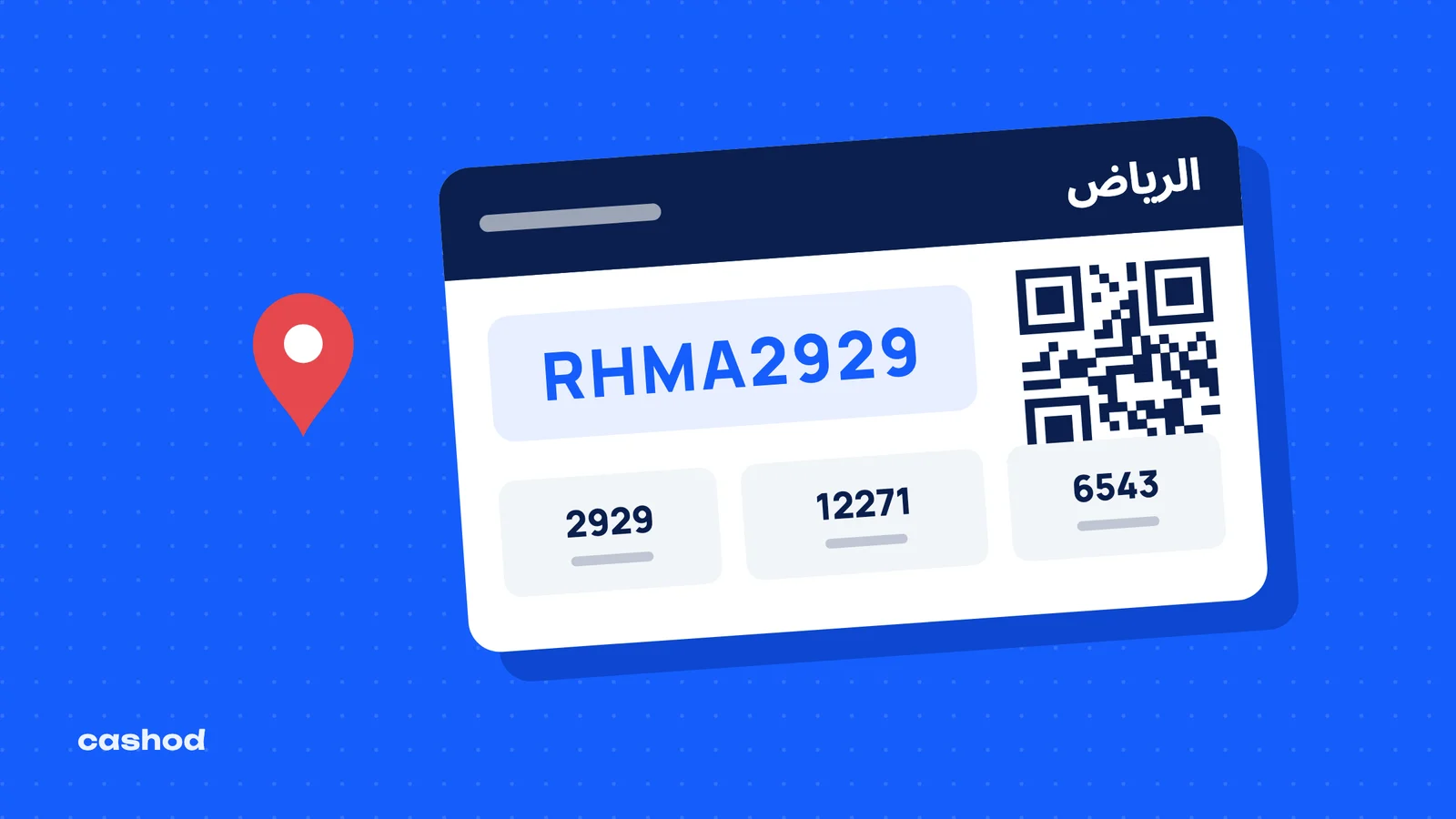
The most Saudi-specific point is Saudi Post’s National Address. Every location has a short address of 4 letters and 4 numbers, and SPL says using it speeds up delivery without the need for further calls. Add a “short address” field to your order form. It is one of the simplest ways to cut parcels lost to unclear addresses.
Finally, the Kingdom is large. Shipping every order from Morocco adds delay and customs formalities, and a refused international parcel is very expensive. Serious COD selling usually needs stock inside the country, with a fulfilment provider or a local partner.
Confirm every COD order before it ships
A refused parcel pays for transport twice, out and back, and earns nothing. Confirmation is still the best protection, as it is in Morocco. Do it by phone or on WhatsApp, in clear Arabic, ideally with agents at ease in Gulf dialect. The script checks the name, city, district, short address, product, size or colour, and above all the total amount to pay at the door, delivery included.
Timing matters. CST finds that internet use peaks from 9 PM to 11 PM, and that Saturday is one of the busiest days. Those are good windows for WhatsApp confirmation messages; calls belong in reasonable hours. Remember too that Riyadh is three hours ahead of Morocco, which runs on GMT, so a team in Casablanca has to shift its working hours.
For the method itself, our guide to COD order confirmation covers scripts and follow-up calls, and our guide to fake COD orders explains how to spot the orders you should not ship.
Count profit per delivered order
In Saudi Arabia as anywhere else, profit is measured on delivered and collected orders, not on orders received. Count the product cost, advertising per order, delivery, cash-collection fees, VAT and the cost of refusals: each refused parcel adds a trip out and a trip back. Our COD calculator lets you test these inputs before you set your price in riyals.
Prepayment improves the sum directly, and Saudi buyers are ready for it. SAMA data reported by the Saudi Press Agency and compiled by Qoyod show that e-commerce sales via mada cards exceeded SAR 69.3 billion in the first quarter of 2025, up from around SAR 44 billion a year earlier, 56% growth, with more than 370 million online purchases in a single quarter. A modest prepayment discount often costs less than a high refusal rate.
Where Cashod fits
Cashod is a COD order-management tool. For a store selling in Saudi Arabia, this is what it covers and what it does not.
- Phone confirmation. Cashod includes a call center where agents confirm COD orders by phone.
- WhatsApp confirmation. Cashod can confirm orders over WhatsApp, including with an AI agent.
- Several stores. One Cashod account can manage several stores, for example a Saudi store next to a Moroccan one.
- Returns. Cashod tracks returned parcels; each carrier’s delivery and return fees are set per city.
On delivery, to be plain about it: any other carrier can be added to Cashod manually, without automatic shipment creation or tracking. Your team then follows parcels on the carrier’s side.
Cashod support answers by email, chat and phone, Monday to Friday, 9 AM to 6 PM GMT (Morocco time), which is three hours earlier than the clock in Riyadh.
Checklist before your first Saudi order
- Legal status settled: commercial registration or verification on an authorized platform, and VAT registration where it applies.
- An Arabic, mobile-first store, prices in riyals including VAT, identity and contact details on display.
- A return policy that follows the law: seven days, product condition, who pays.
- A “short address” field on the order form.
- Stock in the country, or a realistic delivery time well inside the legal limit.
- A carrier chosen after comparing COD fees, payout timing and return prices.
- Online payments offered next to COD, with a reason to choose prepayment.
- An Arabic confirmation script and calling hours set to Riyadh time.
- Margin worked out per delivered order, refusals included.
The Saudi market rewards stores that look local and deliver fast. COD remains a useful way to win new buyers there, as long as every order is confirmed and COD sits next to the digital payments buyers already use.