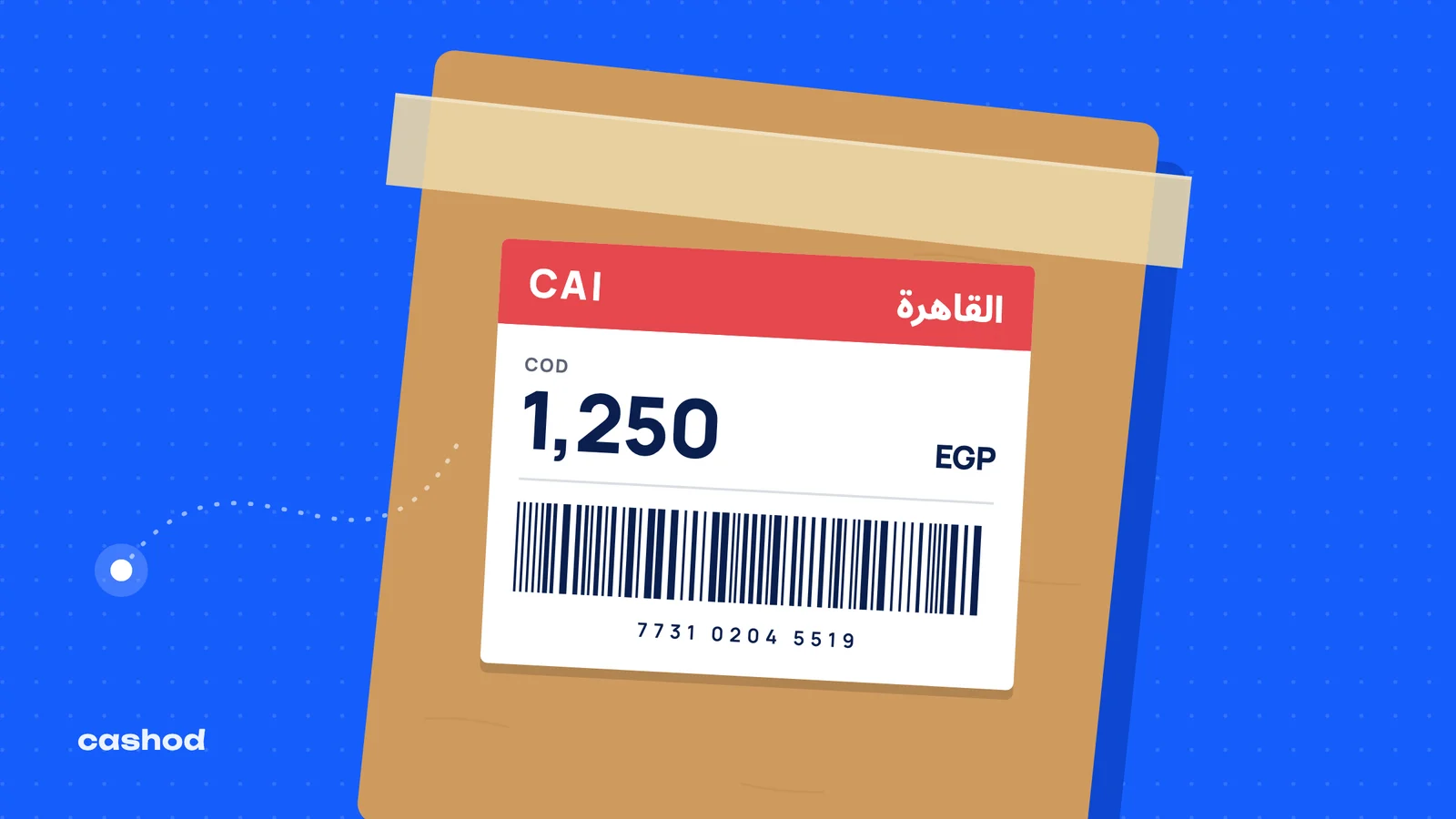
Egypt is the most populous market in the Arab world, and one of the few where cash on delivery (COD) is still the normal way to buy online. A seller from Morocco, Tunisia or Algeria will find much of it familiar: people order from their phone, pay the courier in cash, and sometimes refuse the parcel at the door. The differences are real, though. Prices are in Egyptian pounds, consumer law sets its own deadlines, the data protection law is coming into force, and delivery runs on a mix of the national post and private couriers that concentrate on the big cities.
This guide covers the market, payment habits, the rules a store has to follow, delivery, order confirmation and the profit calculation. It draws on published data from official bodies, the central bank, law firms and trade press. It is general information, not legal or tax advice: have a professional review your situation before you start selling in Egypt.
A young, mobile market that is still growing fast
According to ECDB, Egyptian e-commerce generated US$2,342m of revenue in 2025, up 20-25% on the previous year. That is far smaller than the Gulf markets, but it is growing quickly. The big names are well known: Amazon leads, followed by Noon and Carrefour. A COD store does not win on price against them. It wins on a niche, on delivery speed and on service.
Demand comes through the phone. Egypt’s Information and Decision Support Center (IDSC) reports that mobile internet subscriptions reached 92.6 million in December 2025, or 75.3% of mobile subscribers. Mordor Intelligence estimates that smartphones account for 72.48% of online transaction value in 2025. A heavy product page or an awkward order form on a small screen costs you orders directly.
Social media is the shop window. IDSC, citing Kepios, puts social media users at 43.4% of the population at the end of 2025, with about 51.6 million Facebook users and 48.8 million TikTok users aged 18 and above. Those are the two channels where most Egyptian COD stores find their first buyers.
Payments: cash is slipping, but COD still leads
Estimates of COD’s exact weight vary with the method, but they point the same way. P&S Intelligence says cash on delivery held the largest share of payments, 45%, in 2024, and that 55-70% of online shoppers prefer it. Payment platform NORBr, quoted by Egypt Post, found that 57% of e-commerce transactions were paid in cash in 2022. Mordor Intelligence, which groups COD with bank transfers, puts the pair at 34.37% of payment value in 2025. Whichever figure you take, a new store cannot do without cash at the door.
Digital payment is growing fast alongside it. Mobile-wallet accounts reached 46.3 million in the second quarter of 2025, up 29% year on year, driven by providers such as Fawry, Vodafone Cash and Orange Money. The Central Bank of Egypt’s instant payment network (InstaPay) handled 263 million transactions worth more than EGP 1.2 trillion in the first quarter of 2025.
The sound approach is to keep COD as the way in while making prepayment attractive: a small discount for paying by wallet or InstaPay, faster dispatch, or a small gift. Every prepaid order is one that cannot be refused at the door. You can also limit COD to certain cases, such as smaller baskets or areas your courier serves well.
The rules to follow before you sell
Selling to consumers is governed by Consumer Protection Law No. 181 of 2018 and its implementing regulations. The points that matter most to a COD store:
- Arabic is mandatory. Adverts, product data, invoices, receipts and contracts, electronic ones included, must be in Arabic; another language may sit next to it. The supplier’s contact and registration details must appear on them.
- The invoice. Failing to hand over a receipt carries a fine of 30,000 EGP to 1,000,000 EGP, or double the product’s value. With COD, put the invoice in the parcel.
- Cancellation and returns. A buyer may cancel an online order within 7 days of placing it, and get a refund within 14 days of receiving the item, not of ordering it. The period rises to 30 days if the product is defective or non-conforming, as the implementing regulations confirm.
Personal data falls under Law No. 151/2020. Its executive regulations, Ministerial Decision No. 816/2025, opened a one-year compliance grace period. Three points matter to a COD seller: a privacy notice that is clear, visible and in Arabic, real consent before you use customers’ numbers, and a specific permit for electronic direct marketing and cross-border data transfers. Sending WhatsApp promotions to a customer list hosted outside Egypt touches both of those.
On tax, Egypt’s standard VAT rate is 14% on most goods and services, and the registration threshold is EGP 500,000 of annual turnover. If you sell from abroad, settle the local entity, stock imports and VAT with an adviser before the first order.
Delivery: the national post, private couriers and the big cities
Delivery is the heart of COD, and it is where Egypt needs the most care. Two kinds of provider sit side by side.
Egypt Post. It offers small businesses parcel delivery, cash-on-delivery collection and payment of the money into the seller’s account, which, according to its head of international cooperation, happens on the same day as delivery. Its strength is reach: more than 4,600 post offices, including in villages that private couriers rarely serve. You drop the parcel at a branch or book a pickup in the Wassalha app.
Private couriers. Bosta, Mylerz, Aramex and J&T Express are among the names sellers compare. The market is concentrated: the top five companies hold 57% of the courier, express and parcel market. Egypt Post itself notes that private companies focus on the districts where the big volumes are, which in practice means Cairo, Giza and Alexandria. Outside them, delivery takes longer and refusals rise.
Habits matter too. Most e-commerce customers still choose home delivery; collection points exist but are not very popular, although the post is piloting 200 parcel lockers in Cairo. Ask for a precise address: governorate, city, district, street, building, floor and a well-known landmark.
Before you sign with a courier, ask each one the same questions:
- What do they charge to collect cash, and how often do they pay it out?
- What does a return cost, and how many delivery attempts come before a parcel goes back?
- Which governorates do they cover, in how many days, and does the courier call before arriving?
- How do you track parcels and match payouts against delivered orders?
Confirm every order before it ships
A refused parcel pays for transport twice, out and back, and earns nothing. Confirmation is still the best protection. Do it by phone or on WhatsApp, in Egyptian Arabic, which buyers understand and expect. The script checks the name, governorate, full address, product, size or colour, and above all the total amount to hand the courier.
Mind the time difference. Cairo is two hours ahead of GMT in winter and three hours ahead during summer time, which runs from the last Friday of April to the last Thursday of October. A team in Morocco, which runs on GMT, has to shift its calling hours to reach buyers at the end of the Egyptian day.
For the method itself, our guide to COD order confirmation covers scripts and follow-ups, and our guide to fake COD orders shows how to spot the orders you should not ship.
Count profit per delivered order
In Egypt as anywhere else, profit is measured on delivered and collected orders, not on orders received. Add up the product cost, advertising per order, delivery, cash-collection fees, VAT and the cost of refusals: each refused parcel adds a trip out and a trip back. The Egyptian pound has moved a lot in recent years, so recalculate your prices whenever buying or shipping costs change. Our COD calculator lets you test these inputs before you set a price.
Prepayment improves the sum directly. With wallets and InstaPay spreading, a modest prepayment discount often costs less than a high refusal rate, especially on orders going far from the big cities.
Where Cashod fits
Cashod is a COD order-management tool. For a store selling in Egypt, this is what it covers.
- Phone confirmation. Cashod includes a call center where agents confirm COD orders by phone.
- WhatsApp confirmation. Cashod can confirm orders over WhatsApp, including with an AI agent.
- Several stores. One Cashod account can manage several stores, for example an Egyptian store next to a Moroccan one.
- Returns. Cashod tracks returned parcels; each carrier’s delivery and return fees are set per city.
On delivery, to be plain about it: any other carrier can be added to Cashod manually, without automatic shipment creation or tracking. Your team then creates parcels and follows their status on the carrier’s side.
Cashod support answers by email, chat and phone, Monday to Friday, 9 AM to 6 PM GMT (Morocco time), which is two or three hours later on the clock in Cairo, depending on the season.
Checklist before your first Egyptian order
- Legal status and VAT settled with an adviser.
- An Arabic, mobile-first store, prices in Egyptian pounds, seller details on display.
- A return policy that follows the law: cancellation, refund after receipt, defective products.
- An Arabic privacy notice and consent before any marketing message.
- An order form that asks for the governorate, district and a landmark.
- A courier chosen after comparing collection fees, payout timing and return prices, and a plan for areas outside the big cities.
- Prepayment offered next to COD, with a reason to choose it.
- An Egyptian Arabic confirmation script and calling hours set to Cairo time.
- Margin worked out per delivered order, refusals included.
Egypt rewards stores that speak their buyers’ language, deliver fast and confirm every order. COD is still the way in there; the profit comes from the discipline around it.