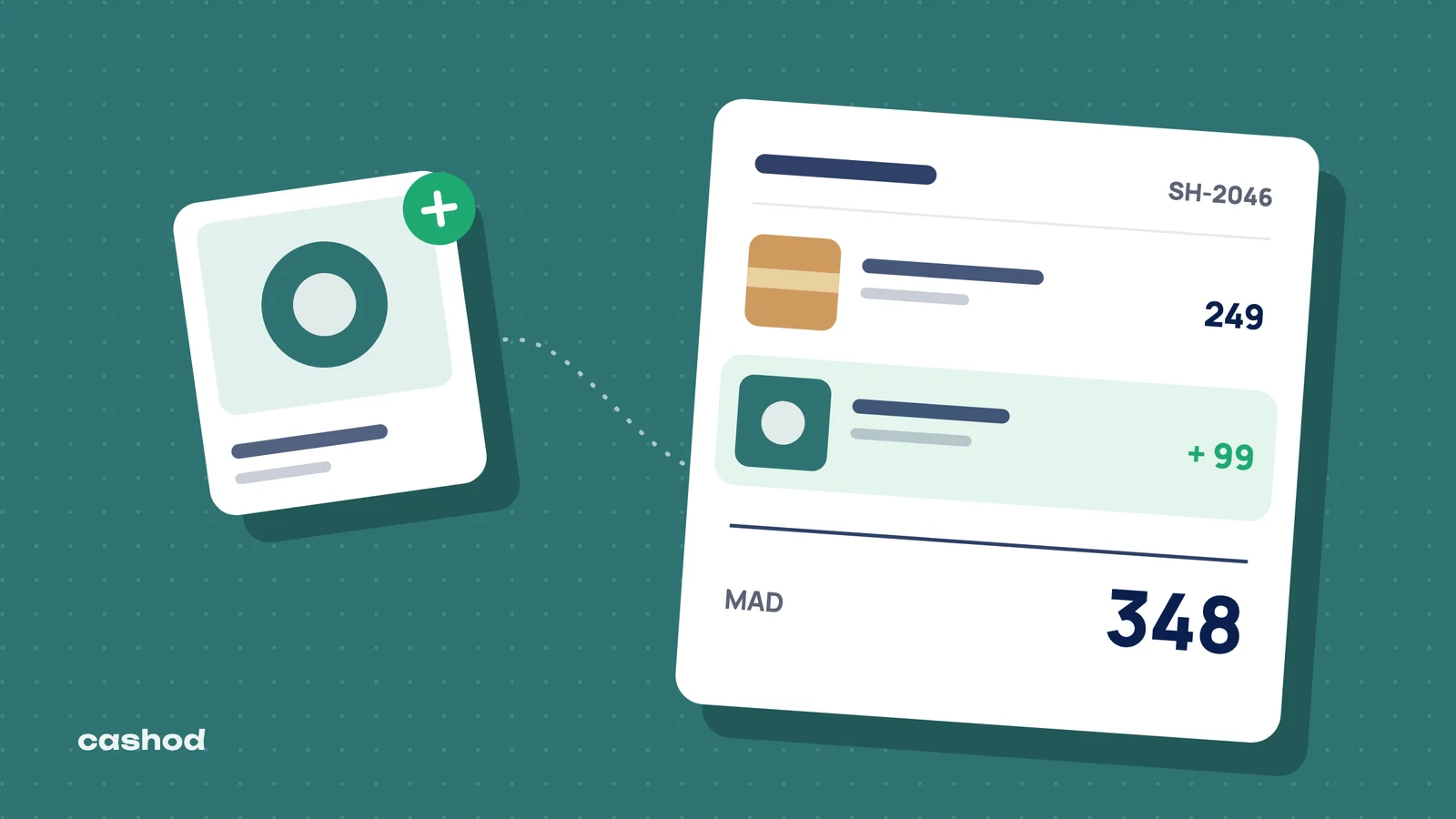
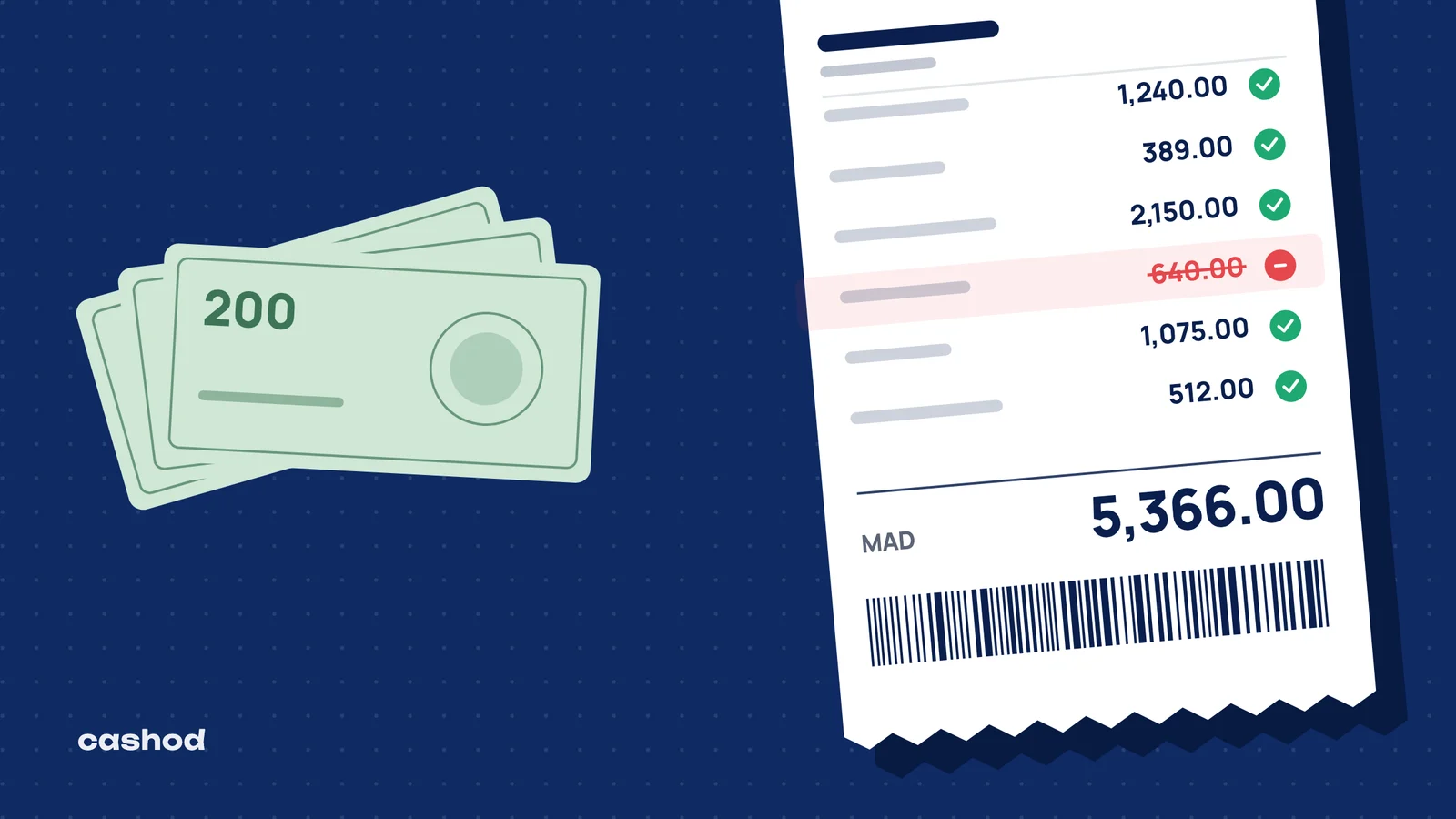
Every week, sometimes every day, your delivery company sends you a transfer. In theory it equals the cash collected at your customers’ doors, minus the carrier’s fees. In practice, theory is not enough: a parcel delivered but missing from the statement, a return billed although the contract says returns are free, a COD commission taken twice, and the gaps pile up quietly. This guide shows how to reconcile each carrier payout with your delivered orders, parcel by parcel, and what to do when the numbers do not add up.
Why a carrier payout has to be checked
With cash on delivery, your revenue passes through someone else’s hands first. In Morocco that is still the norm: according to the ANRT survey cited by Le Matin, more than 66% of orders are still paid in cash at the door. Your carrier is therefore not just a logistics provider; for a few days at a time it holds part of your cash.
The sums involved are large. At the Logismed trade show, the CEO of CEOS Technology pointed out that logistics operators sometimes collect cash-on-delivery amounts worth up to 10 to 20 times their own revenue. The same article reports that Cathedis handles more than 220,000 parcels a month and collects nearly one billion dirhams a year in cash on delivery. At that scale, a small error per batch quickly becomes real money.
The imbalance has already hurt sellers. Le Matin writes that several companies disappeared in recent years with large sums, because the legal framework was not strict enough. In May 2026 the paper described a bill that would require prior authorisation from the relevant ministry to run e-commerce delivery, with fines of 500,000 to 5 million dirhams and up to three years in prison for managers operating without approval. Whatever that bill’s timetable turns out to be, your own checks remain the day-to-day protection you control.
An undetected gap also distorts everything downstream. Your margin per order, your stock count and your ad budget all rest on the money that actually arrived. Le Matin sums up what refusals do in words that fit a wrong payout just as well: stock tied up, doubled logistics costs, blocked cash.
Payout delays and methods: what carriers announce
Before checking a payout, you need to know when it should arrive and in what form. Terms vary from one company to the next, and they are often negotiable. Here is what a few players in the Moroccan market publish:
| Company | What it announces | Source |
|---|---|---|
| Ameex | Collected amount paid by bank transfer within 24h of delivery; Ameex presents a weekly payout as common market practice | Ameex price list |
| Livo | Payments within 24h; money remitted every day, against three times a week at other companies according to its own comparison | Livo website |
| Ozon Express | Payout within 24h by bank transfer, according to the SwiftLog directory | SwiftLog |
| Express Relais | Partnership with Damane Cash to make remittances almost instant; couriers can deposit cash in 4000 agencies | Finances News Hebdo |
| CTM Messagerie (e-tijar offer, 2021) | Payout by cheque, transfer or cash made available, as the partner prefers | Boursenews |
The SwiftLog directory offers a useful benchmark: the best carriers pay out within 24 to 48h, and beyond 7 days your cash flow suffers. The trend is towards faster money: Cathedis is equipping its roughly 800 couriers with a mobile wallet to make cash flows instant. A faster payout does not remove the need to check, though. It multiplies the number of transfers you have to match.
Write down, for each carrier: how often it pays, the delay between delivery and payment, the payment method, the statement format (PDF, Excel or dashboard) and who to contact when something is off. To compare the price lists themselves, see our COD delivery prices by city.
The expected amount: the basic formula
Reconciling means comparing two numbers: what the carrier paid you, and what it should have paid you. For a given batch of parcels, the second one is:
Expected payout = cash collected on delivered parcels − delivery fees − return fees − COD commission − any other fees in the contract
- Cash collected: the price the customer confirmed, including delivery if they pay for it. Watch for discounts given on the phone or at the door: the amount to collect is the one printed on the waybill.
- Delivery fees, usually charged per delivered parcel by city. Ameex, for example, charges only for delivered parcels, by destination city.
- Return fees, which depend on your contract: free with some carriers, charged by others.
- The COD commission, which SwiftLog puts at 0% to 3% of the amount, on top of the delivery fee.
- Other fees: account opening, monthly minimums, claim fees. SwiftLog advises you to ask for the full price grid in writing; without it you cannot tell whether a deduction is justified.
Every line on the statement should map to one of these components. A deduction you cannot explain is already a discrepancy. To check that a product stays profitable once all these fees are taken out, the COD calculator works it out order by order.
The reconciliation method in six steps
- Define the batch. A payout covers a list of parcels, not a vague date range. Ask for every transfer to come with a detailed statement of the parcels it covers.
- Export your delivered orders. From your order tool, export the orders marked delivered for the period, with tracking number, city, amount to collect and delivery date.
- Match on the tracking number. It is the only reliable key: two customers can share a name and two orders can share an amount. Matching by name or amount produces false matches.
- Compare line by line. For each parcel found on both sides, check the amount collected and the fees deducted against the price grid for that city.
- Sort the discrepancies. Delivered parcel missing from the statement, different amount, wrong fees, return billed by mistake, parcel paid twice: each type calls for a different action, set out in the next section.
- Claim and close. Send the carrier the list of discrepancies with tracking numbers, in writing, and keep the reply. A gap settled on the next transfer has to be ticked off in turn before you close the file.
For a seller who ships little, a spreadsheet is enough: one sheet for your orders, one for the statement, and a lookup column on the tracking number. Past a few dozen parcels a day, manual entry becomes a source of errors in its own right, and that is often where gaps slip through.
The most common discrepancies and how to handle them
| Discrepancy | Likely cause | Action |
|---|---|---|
| Parcel delivered in your records, missing from the statement | Payment pushed to the next payout, or cash not handed in by the courier | Wait one cycle, then claim with the tracking number and delivery date |
| Parcel paid on the statement but not delivered in your records | Status not updated in your tool | Fix the status and the stock; nothing to claim |
| Amount collected below the confirmed price | Discount at the door, partial delivery, waybill error | Check the waybill, then ask the carrier for proof |
| Delivery fees that differ from the grid | Wrong zone, weight surcharge, grid changed without notice | Compare with the signed grid and claim the difference |
| Return billed although the contract says it is free | Billing error or a clause applied wrongly | Quote the contract clause in your claim |
| Parcel marked returned but never back in stock | Lost parcel, or stuck at a depot | Ask for proof of return or the compensation set in the contract |
| Same parcel paid twice | Duplicate in the carrier’s export | Report it at once: the overpayment will be clawed back later |
Most of these gaps come from parcels going back and forth. According to figures presented at Logismed and reported by Le Matin, between 30% and 40% of deliveries need a second attempt, and return rates can reach 20% to 40% depending on products and platforms. Every redelivery and every return adds one more status change, and one more chance for your file and the carrier’s to drift apart. Returns deserve their own tracking: our guide to measuring and reducing the return rate explains how to count them.
The indicators to track every month
- Cash held by the carrier: the total collected on delivered parcels that has not yet been paid out. It is your money sitting with someone else; if it grows month after month, something is slowing down.
- Actual payout delay: the average number of days between delivery and transfer, against the delay you were promised.
- Discrepancy rate: the share of parcels on the statement that show a difference, whatever the cause.
- Amounts claimed and recovered: what you claimed, what was settled, what is still open.
- Real cost per delivered parcel, including return fees and commission, carrier by carrier.
These numbers also help you choose partners. Before committing, SwiftLog recommends sending 20 to 50 parcels over 2 weeks and measuring, among other things, the COD payout delay and the quality of tracking. A carrier that delivers well but pays late, or with repeated gaps, costs more than its price list suggests.
What Cashod keeps at hand for the check
Cashod tracks returned parcels, and each carrier’s delivery and return fees are set per city. That puts in one place the price reference you compare a statement’s deductions against, and the list of returns to match with what the carrier reports. The returns page shows how it works.
One Cashod account can manage several stores, so you do not have to piece delivered orders together store by store when you check a payout. The carriers Cashod creates and tracks shipments with are listed on the integrations page; any other carrier can be added manually, without automatic shipment creation or tracking.
Checklist before closing a payout
- The detailed statement adds up to the amount that reached your bank account.
- Every parcel on the statement was found by its tracking number.
- Every parcel delivered in the period is on this statement or on the waiting list for the next one.
- Deducted fees match the signed grid, city by city.
- Billed returns are parcels that actually came back into stock.
- Discrepancies have been sent to the carrier in writing, with a follow-up date.
- The cash still held by the carrier is noted for next month.
Once the method is in place, each payout takes a few minutes to check. That is little next to what a gap repeated for months ends up costing.